Nina Munteanu

Author At Large

Site Search:

Pages

Categories

Nina Munteanu, Author at Large

August 6, 2008
Nina Munteanu

Nina Munteanu

Congratulations! You’ve landed on the website of Nina Munteanu, Canadian SF author and ecologist.  Very soon, we will have some cool stuff to show you (besides what follows below). Meantime, here’s a little bit about Nina:

The ecologist:  Nina currently does research and gives talks in science and limnology (No! That isn’t the study of limbs! She studies freshwater) and is driven by a passion to help keep our planet’s environment healthy. She is a passionate traveler, and has tasted her way around the world from Bangkok to Paris…  

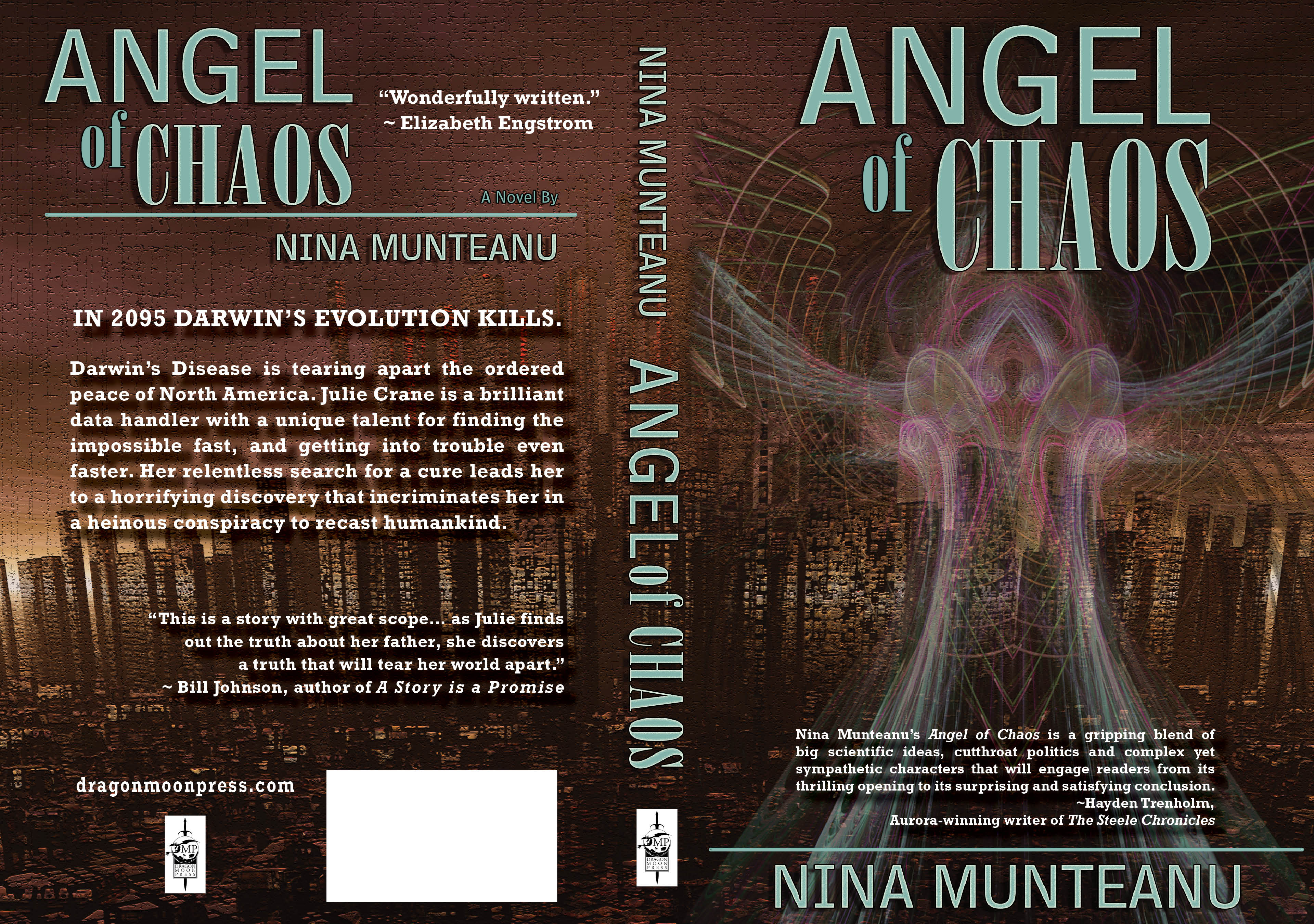
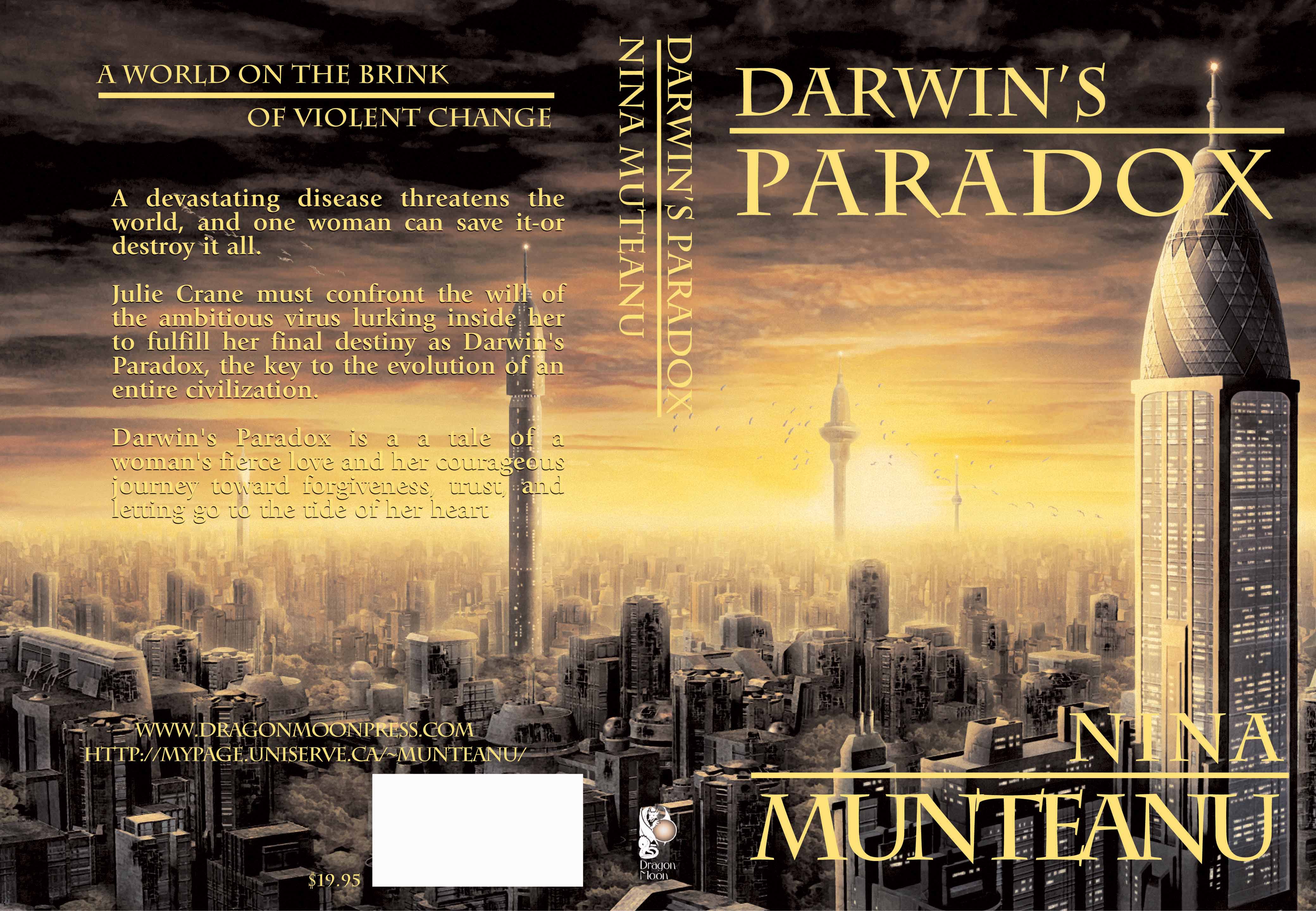
The author:   Nina has published short stories all over the planet (with translations by magazines into Greek, Romanian, Polish, and Hebrew. Her latest novel, “Darwin’s Paradox” (a science fiction ecological thriller by Dragon Moon Press), explores humanity’s co-evolution with machine intelligence and Nature’s intelligence. She also writes critical essays and reviews, several of which have appeared in Strange Horizons, IROSF, and The New York Review of Science Fiction. Her personal heroes include Dr. Lynn Margulis and author Ray Bradbury.

The Blogger:  Nina is also  The Alien Next Door, author of the award-wining blog which hosts lively discussions on pop culture, travel, science, science fiction, writing and philosophy.

This site, currently under construction, will eventually have diverting articles and news on the topics of:

  • Science
  • Science Fiction
  • Writing & Publishing

For READERS it will also show you:

  • what she’s written
  • where you can purchase it or read it online
  • exciting previews of NEW MATERIAL

If you are an aspiring WRITER, you can soon purchase these right here:

  • “The Alien’s Guide to Cool Writing” (a practical writer’s guide for the beginner writer from an erudite Alien’s perspective), which gives you easy to adopt rules guaranteed to improve your writing in this or any other galaxy; and, 
  • “How to Live Your Passion”, the DVD of Nina’s inspirational lecture (given at the Calliope Conference at the University of British Columbia, Southpointe Academy, Tsawassen and other schools and libraries across Canada) on how to get started and how to keep writing. (”Never give up! Never surrender!”–Galaxy Quest)

Here is what some readers have said about Nina’s writing tips from “The Alien’s Guide to Cool Writing”:

“Beautifully informative!”–Brady Frost, blogger

“Great points; this is an inspiration for me. It’s so motivating to read articles such as yours and get hyped for the work ahead.”–Blackburn, blogger & writer

“Great writing lessons! They are practical and simple for any budding writer.”–Jean-luc Picard (Graham Saeger), blogger & writer 

If you are part of a Book Club or School, Library or other literary organization, you can book Nina for a lecture or workshop.

Here is what a few have to say about Nina’s talks:

“Nina Munteanu  presented to a packed room of participants… [Her talk] was lively and knowledgeable and she made it approachable, relevant and humorous.  Nina was a pleasure to work with. She was enthusiastic, supportive and full of ideas… We had a great time!”—Pamela Richardson, Calliope Conference Coordinator, University of British Columbia.


You can visit Nina’s award-winning blog, The Alien Next Door, which hosts lively discussions on pop culture, travel, science, science fiction, writing and philosophy. Examples of her Alien posts to do with writing, science & science fiction, and reviews of movies and books follow below. You might also enjoy her popular in-depth reviews of movies and books there.


Nina’s American Book Tour: Bozeman, Montana

August 2, 2008

The Barnes & Noble book store in Bozeman, Montana, is located on Main Street, a hip and funky street that gets downright interesting by the time you hit 10th Avenue (more on that in a later post). I signed several copies of Darwin’s Paradox last week at the store and must thank Jeni, Karen and Louise (hope your ankle is better, Louise!) for their help in setting everything up on such short notice. If you live in or near or are simply passing through this cool city in the Montana mountains and gateway to Yellowstone National Park and Glacier National Park, drop in to Barnes & Noble and pick up a signed copy. Last I heard there were still some left.

Bozeman itself is a colorful and attractive city with cultural diversity and a level of “coolness” that comes from being a university town set amidst lofty mountains with a western flavor. Bozeman is located in the Gallatin Valley, surrounded by magnificent mountain ranges. North of the city, the Bridger Mountains attract thousands of skiers each winter. The Gallatin Range and the Madison Range, south of Bozeman, rise more than 10,000 feet and have peaks covered with snow much of the year. Montana State University is located in Bozeman, with a very attractive campus and programs that range from agricultural sciences, engineering to the fine arts. I spent some time there, particularly in the student union building, where the bookstore and the pub were. I would so enjoy teaching here; I just might…My son wouldn’t mind it too much either. According to PubClub.com: “this is place to go if you love to be outdoors and ski…ski bums are all over the campus and so are the hippies…its a true party college.” The Museum of the Rockies, located on campus, features many wonderful paleontology exhibits. Jack Horner, the world’s top dinosaur hunter and an adviser to the movie “Jurassic Park,” works at the Museum. Occasionally, Museum visitors see Professor Horner inspecting the Museum’s latest exhibits.

The visitor’s guide describes Bozeman as “a charming town. In a John Wayne—Norman Rockwell—Bob Marley sort of way.” The town’s history goes back to the time when Gallatin Valley (where Bozeman lies) was used by Indian tribes, including the Flathead, Sioux, Shoshone, Nez Perce, and Blackfeet, who all hunted for game and edible plants. According to tribal lore, Indians agreed not to fight in the Gallatin Valley, instead conceding to share the area’s beauty and resources with one another. European fur traders came in the 1700s, with Lewis and Clark leading a historic expedition to the Three Forks of the Missouri in 1805. Mountain men roamed through the area trapping beaver and acting as guides.

The town is named after John Bozeman, a Georgian who’d left his family to find fortune in the West. The town was named in his honor in 1864, shortly before he was killed near Yellowstone under mysterious circumstances.

Yellowstone National Park, just south of Bozeman, was created in 1872 and is the first and oldest national park in the world. Bozeman is often referred to as the “Yellowstone Connection”. After an unsuccessful bid to become the state capital, Bozeman was chosen as the site for the new agricultural college, which became Montana State University, home of the fighting Bobcats.

Bozeman currently supports a population of 30,000 interesting “urban cowboys” from young to old and funky to intellectual. From appearance, dress, comportment and speech I was treated to an attractive and exciting commingling of southern wild west and northern yuppy vogue. Travel & Leisure Online wrote: “The look on the street is Carrie Bradshaw in cowboy boots. No need to pack a blow-dryer; the Keep it Wild philosophy extends from nature to hair, which is also left untamed.” I felt at home.


Star Wars, Our 20th Century Myth

July 21, 2008

Over twenty-five years after the first Star Wars motion picture blasted its way through our movie screens, the saga continues to live strongly in literature and cinema. To date, six films and three animated series for television were made, with a live-action series and a 3D CGI animated series in pre-production as well as a 3D CGI full-length theatrical movie, The Clone Wars, scheduled for U.S. release on August 15, 2008. The six films alone have generated over $4.3 billion in revenue to date, making them the third highest grossing film series.

Although the current Star Wars New Jedi Order series (its 27th and last installment released in spring of 2004) leaves much to be desired from a literary standpoint, loyal fans of the Star Wars phenomenon, including, alas, yours truly, have persisted with the series, helping it maintain a place in the New York Times Bestsellers list. How did this come to be? Why do we read on despite our better judgement about literature and art? To understand the enduring success of a shallow plot-driven adventure series is to understand the basis for its creation: the original Star Wars concept as realized by George Lucus. The answer lies in one word: myth.
In his original “Star Wars” trilogy, George Lucus fashioned for us a long awaited 20th Century myth. He captured the current North American zeitgeist and portrayed a deep and abiding truth about the deeper meanings of what lies beneath our daily lives. Lucus did this by “taking the symbols gathered from his own experience of the world and transforming them into a metaphor that revealed something about the mysteries of human existence” (Mary Henderson, author of “Star Wars: the Magic of Myth”). According to Henderson, Lucas dramatized the eternal struggle of good versus evil and, by suggesting a way to emerge victorious from that struggle, fashioned a tale with all the elements of myth. Lucas’s modern myth resonates with scores of earlier myths from around the world including the classic myths of Siegfried, King Arthur, Odysseus, Theseus and the Minotaur, Dante and Beatrice, David and Goliath, and a host of others. Lucus takes elements of all these ancient classics and stirs them up with technology into a retro-punk-rock cyber-version never before seen on screen.

If, as Joseph Campbell said, “The artist is the one who communicates myth for today,” then Lucas is a great artist. It starts with his intriguing and quirky ‘alternate reality’ of ancient archetypes within a highly advanced technological world that begins “A long time ago in a galaxy, far, far away . . .” Swords, sorcery and chivalry meld with robots and zooming rocket ships . . . a dark lord wearing flowing robes looks — and sounds — like an android . . . a damsel in distress, who packs a laser gun, sends a message through a cocky droid . . . a young “Siegfried” embarks on a quest armed with his father’s sword, a lightsaber that bites through metal, and whose ‘steed’ is an X-wing spaceship. Medieval legend meets space and technology. Says Henderson, “. . . it is in illo tempore, a timeless eternity, both now and forever.”

Lukas paints his myth with rich archetypical characters–princesses, knights, dragons, fools, and wizards who help or hinder the hero on his journey–and archetypal images that resonate with traditional mythical constants. To unfold his hero’s transformation as he discovers his deeper nature, Lucas sheds subtlely for bold strokes, which includes the use of allegorical names: Luke (Lucas’s alter-ego) Skywalker is destined for the stars; Han Solo is an independent, self-reliant cynic; and Leia Organa is leader of the living, organic Rebellion against a mechanized, lifeless system. In Leia, Lucas takes the passive damsel in distress and elevates her to a kind of “Joan of Arc”. She is Luke’s inspiration and by the end of the second movie (“The Empire Strikes Back”) she will rescue him, playing “Beatrice to his Dante”.
Lucas makes it very clear that the heart of the Star Wars story lies in the central conflict of paired and linked opposites such as good vs. evil, light vs. dark, love vs. hate, compassion vs. fear. Which brings us to one of the principal threads of this particular hero’s journey: the Force, itself made of opposite pairs: dark and light sides. The Force is something sacred, powerful and intangible. Ben, Luke’s mentor and a Jedi Knight tells Luke that to become a Jedi, Luke must know the Force: “The Force . . . surrounds us and penetrates us. It binds the galaxy together.” In order to use his father’s old lightsaber, Luke must quiet himself from his desires and fears and tap into the spiritual network that connects us to all things. The Jedi and their use of the Force incorporate concepts of major religions and much of Eastern philosophy, while remaining true to a classic Western value: the importance of the individual. Biblical elements also abound. Darth Vader’s slide into the dark side of the Force is a fall from grace, like a fallen angel, who must be redeemed through atonement and reconciliation; while Luke, his son, struggles with the shadow of the dark side of the force as it creeps into his mind. Like a captivating samba, the pairs of opposites step in rythmic syncrony between mind and heart.

According to Henderson, 20th Century myths are obliged to incorporate the machine. Lucas’s dystopian vision in Star Wars marries the technological zeitgeist with a totalitarian dialectic, portraying the state as a fascist machine striving for ultimate order. Technology is itself an archetype, providing an extension of humanity’s power to control and manipulate itself and its world and in so doing, lose a critical part of what it means to be human. In Star Wars, the Empire uses technology as a malevolent instrument, with Vader, himself largely made of machine prosthetics, additionally subverting the life-supporting qualities of the Force to ensure Imperial domination. Vader’s human spirit has been consumed by the Imperial machine. Luke must resist the lure of “the system”, and the lure of his father’s invocation to join him, and revolt against the status quo.

Lucas’s visionary myth is ultimately appealing because it can be interpreted at so many levels from personal to societal. In striving for utopian order, the Empire’s totalitarian oppression of freedom of expression (and to be human) is played out through the relationship of Luke, Darth Vader and Leia. Inspired by his beloved country and people (Leia) our warrior poet (Luke) confronts and rebels against the system that helped “make” him (Darth Vader, his father). Only, in this galaxy, the damsel-in-distress is quite capable of taking care of herself.
Ellen Goodman, in her review of Star Wars in 1977, summed it up very neatly: “It’s not just about bad guys and good guys, but about bad technology and good technology. The good guys are on the side of truth, beauty and the cosmic force, but they aren’t opposed to machines. Nor do they fight missiles with stones. The real battle is between one technological society that supports a Lone Rider and praises his instinct, and a technological society that overrules individuals and suppresses instinct.”
Scoffed by literary snobs as space-opera fluff, Star Wars is no less visionary and relevant than any “real life” drama you could care to mention. This allegorical 20th Century myth explores good vs. evil in its truest sense, indeed, in a biblical sense. Says Luke Skywalker in the first page of “Refugee” (NJO): “There will always be people who are strong for evil. The stronger you become, the more you’re tempted.” This saga explores faith and the power in believing in something you can’t see. Says Yoda, Luke’s wise mentor (and himself someone who is not what he first appears to be): “There is no try; only do and do not.” This saga is about temptation (the dark side is always easier and looks more appealing to those lacking patience and vision) and overcoming fear and its cousin, impatience, toward wisdom. Star Wars is a classic “hero’s journey of enlightenment” and portrays in a rich tapestry of images and metaphor the hero’s classic struggle of paired opposites: love vs. hate; compassion vs. fear; forgiveness vs. retalliation; grace and humility vs. vain-glorious hubris.

Since the release of the Star Wars trilogy twenty years ago, George Lucas made two prequels. The third is scheduled to release summer, 2005, and will explain how the dark Jedi, Darth Vader, came to be. The most recent Star Wars movie, “Star Wars 2: Return of the Clones”, which chronicles the adolescent years of Luke’s father, Anakin, was released in May, 2002 to an audience agog with Star Wars fever. It would seem that ironically, the movie’s shortcoming and its strength is one in the same: special effects. In a stunning comment to me shortly after viewing the film, my then-eleven year old son told me that he found the movie too dazzling, so much so that it spoiled the story for him and he pined for something more simple (for the eye as well as the mind). I found this incredibly inciteful coming from the generation that tends to be “bored” with lengthy stories that lack non-stop action. Although the effects accomplished that of providing us with incredibly vivid and stunning settings, such as Coruscant as seen from several spaceships entering its atmosphere, I had to agree with my son: there is no surrogate for a well told tale. No amount of razzle-dazzle can replace this. What my son pointed out to me is that even a well told story can be lessened by distracting elements, such as special effects.
A decade since the trilogy a fast-growing Expanded SW series by Bantam/Spectra made its way to fans, eager to read about some of the most memorable characters in fiction and has swollen to over 100+ books by various authors (not including the 25+ books of the New Jedi Order series by Lucas Books (Del Rey) and a host of books set before “A New Hope”). Written by as many writers as there are books, this series provides rich detail of the Star Wars universe. But, the original myth of the hero’s journey slides beneath the details of adventure, conflict and war. Most books focus on plot-driven space conflict, hard-boiled humor and clichéd prose, their success relying on fan’s love of established characters and scenarios. The role of the Force in shaping humanity and the universe is all but invisible. Only the occasional author elevates one or more characters into a marriage of personal theme with the greater arena of myth.
So why do we keep reading? Perhaps it is simply to linger with characters who have previously resonated with us so deeply. And it is still worthwhile to peruse the mineral for a glance at the occasional jewel.

References:
Campbell, Joseph. 1973. “The Hero with a Thousand Faces”. 2nd edition. Nollingen Series no. 17. Princeton, N.J. Princeton University Press.
Henderson, Mary. 1997. “Star Wars: the Magic of Myth”. Bantam Books, New York, N.Y. 214pp.
Goodman, Ellen. 1977. “A ‘Star Wars’ Fantasy Fullfillment”. Washington Post, July 30.


Nina’s American Book Tour: Louisville, Kentucky

July 13, 2008

Yesterday, I was in Louisville, Kentucky, and spent some time in the Hurstbourne Barnes & Noble bookstore, signing copies of Darwin’s Paradox. Get ‘em while they’re hot and newly autographed, folks!

When I first got into Louisville, I wasn’t sure how to pronounce the name. The standard English pronunciation is “looeeville” (referring to King Louis XVI, for whom the city is named), which is often utilized by political leaders and the media. But most native residents pronounce the city’s name “looavul”— often this degrades further to “luvul”. The name is often pronounced far back in the mouth, in the top of the throat.
Located in north-central Kentucky close to the Indiana border, Louisville is Kentucky’s largest city. It is ranked as either the 17th or 27th largest city in the United States depending on how the population is calculated. Louisville is famous as the home of “The Most Exciting Two Minutes in Sports”: the Kentucky Derby, the widely watched first race of the Triple Crown of Thoroughbred Racing.

Although Louisville is situated in a Southern state, it is influenced by both Midwestern and Southern culture, and is commonly referred to as either the northernmost Southern city or the southernmost Northern city in the United States.

Louisville was the site of many important innovations through history. Notable residents include inventor Thomas Edison, the first Jewish Supreme Court Justice Louis Brandeis, boxing legend Muhammad Ali, newscaster Diane Sawyer, and writers Hunter S. Thompson and Sue Grafton. Notable events include the first public viewing place of Edison’s light bulb, the first library open to African Americans in the South, and medical advances including the first human hand transplant, the first self-contained artificial heart transplant, and the development site of the first cervical cancer vaccine.

Louisville had one of the largest slave trades in the United States before the Civil War and much of the city’s initial growth is attributed to that trade. During the Civil War Louisville became a major stronghold of Union forces, which kept Kentucky firmly in the Union. It was the center of planning, supplies, recruiting and transportation for numerous campaigns. Despite being surrounded by skirmishes and battles, Louisville itself was never attacked. After 1865, returning Confederate veterans took control of the city, leading to the jibe that Louisville joined the Confederacy after the war was over.
The first Kentucky Derby was held on May 17, 1875, at the Louisville Jockey Club track and 10,000 spectators came to watch Aristides win the race.

On March 27, 1890 the city was devastated and downtown nearly destroyed when an F4 tornado tore through the city at 8:30 pm as part of the Mid-Mississippi Valley Tornado Outbreak of March 1890. An estimated 74 to 120 people were killed. The city quickly recovered and signs of the tornado were nearly totally absent within a year.

In late January and February of 1937, a month of heavy rain in which 19″ fell prompted what became remembered as the “Great Flood of ‘37″. The flood submerged about 70% of the city, power was lost, and it forced the evacuation of 175,000 residents, and also led to fundamental changes in where residents bought houses. Today, the city is protected by numerous flood walls.

Louisville is one cool town! You folks rock! Oh, and: “Louisville, keep it weird!” More in a future post (I met some VERY interesting people, especially at my favorite place, Starbucks!). If you missed my previous post on my “great American journey”, part one of a series entitled “America, You’re Beautiful!” go here. Well, next is Columbus, Ohio…

The Novelist–He said, She said: Using Dialogue

July 12, 2008

One of the most important devices to spice up narrative and increase pace is the use of dialogue. There’s a reason for this: we read dialogue more quickly; it’s written in more fluid, conversational English; it tends to create more white space on a page with less dense text, more pleasing to the reader’s eye. Dialogue is action. It gets readers involved.

Good dialogue neither exactly mimics actual speech (e.g., it’s not usually mundane, repetitive or broken with words like “uh”) nor on the other extreme does it proselytize or educate the reader through long discourse (unless the character is that kind of person). Good dialogue in a story should be somewhere in the middle. While it should read as fluid conversation, dialogue remains a device to propel the plot or enlighten us to the character of the speaker). No conversation follows a perfect linear progression. People interrupt one another, talk over one another, often don’t answer questions posed to them or avoid them by not answering them directly. These can all be used by the writer to establish character, tension, and relationship.

Below, I provide a few tips when using dialogue in your story.

  • Show, don’t tell: a common error of beginning writers is to use dialogue to explain something that both participants should already know but the reader doesn’t. It is both awkward and unrealistic and immediately exposes you as a novice. For instance, avoid the use of “As you know…” It’s better to keep the reader in the dark for a while than to use dialogue to explain something. Which brings us to the next point.
  • Have your characters talk to each other, not to the reader: for instance, “Hello, John, you loser drunk and wayward son of the most feared gangster in town!” could be improved to, “You stink like a distillery, John! Wait ‘til papa’s thugs find you!”
  • Avoid adverbs: e.g., he said dramatically, she said pleadingly; instead look for better ways to express the way they said it with actual dialogue. That’s not to say you can’t use adverbs (I believe J.K. Rowling is notorious for this), just use them sparingly and judiciously.
  • Avoid tag lines that repeat what the dialogue already tells the reader: e.g., “I’m sorry,” he apologized. “Do you have a dog?” she asked.
  • He said, she said: reduce tag lines where possible and keep them simple by using “said”; another sign of a novice is the overuse of words other than said (e.g., snarled, hissed, purred, etc.). While these can add spice, keep them for special places as they are noticed by the reader and will distract otherwise.
  • Pay consistent attention to a character’s “voice”: each character has a way of speaking that identifies them as a certain type of person. This can be used to identify class, education, culture, ethnicity, proclivities, etc. For instance one character might use Oxford English and another might swear every third word.
  • Use speech signatures: pick out particular word phrases for characters that can be their own and can be identified with them. If they have additional metaphoric meaning to the story, even better. For instance, I know a person who always adds “Don’t you think?” to almost everything they say. This says something about how that person… well, thinks… I knew another person who always added “Do you see?” at the end of their phrase. Again rather revealing.
  • Intersperse dialogue with good descriptive narrative: don’t forget to keep the reader plugged into the setting. Many beginning writers forget to “ground” the reader with sufficient cues as to where the characters are and what they’re doing while they are having this great conversation. This phenomenon is so common, it even has a name. It’s called “talking heads.”
  • Contradict dialogue with narrative: when dialogue contradicts body language or other narrative cues about the speaker, this adds an element of compelling tension and heightens reader excitement while telling them something important. Here are a few examples:

    “How’d it go?”
    “Great,” he lied.

    “I feel so much better now,” she said, jaw clenched.
    “It’s okay; I believe you.” His heart slammed.

    Well, you get the picture, anyway. Hope this helps. Keep writing!


Sky Captain and the World of Tomorrow

July 7, 2008

When Paramount Pictures released the retro science-fiction adventure film, Sky Captain and the World of Tomorrow, September of 2004, it had been much anticipated since June when it was first intended to hit theatres. Was the delay, due to director, Kerry Conran’s additional tweaking of this virtually total CGI movie, worth it? You bet your MAC IIci it was!

Sky Captain was a debut not only for its director. It was also the first motion picture done entirely with no sets, locations or props. The actors were real but everything from 1930-style city scapes to exploding zeppelins and flying robots were digitally rendered. “A lot of filmmakers would find it limiting, but I find it strangely liberating,” said Conran in an interview with Frank Rose in Wired Magazine. Actor, Gwyneth Paltrow, however had another take on working in the computerized blue-screen void: “You get a little nuts in that blue,” said Paltrow. “I started to feel like, if I ever see this color again, I’m going to kill myself.”

Conran had set out a decade ago to make a black and white movie set in the 1930s about a mad scientist and his robot army. When no studio offered the novice the $100 million to re-create the era, Conran turned to computer generated imagery to provide him his richly imagined world. This ironically gave Conran the liberty to create his imagined world just in the way he wanted, which included a clever mixture of obvious animation with sharp realism; multi-textured imagery, creations of realistic fantasy and the use of “brushing”, superimposed images, imaginative angles and muting in mostly sepia-toned settings. Packing every frame with a terraced layering of visual details rivalled only by Ridley Scott’s visual masterpieces (e.g., Bladerunner, Alien) Conran’s film is worth watching several times just to study the details within the rich expanse of its sweeping tapestries.

“Drawing from a well of pulp fiction, film noir and comic book imagery ? not to mention influences from the Wizard of Oz and Metropolis” (Allison Benedikt, Chicago Tribune), Sky Captain and the World of Tomorrow is a stylish and elegant film with a genuine mood and look of a 1930s motion picture. Gwyneth Paltrow plays Polly Perkins, a gutsy reporter who discovers that the world’s scientists are disappearing. After witnessing a giant robot invasion, in which Sky Captain, the mercenary hero-for-hire (Joe Sullivan, played by Jude Law), is called in to help fight, Polly seeks him out to help her solve the mystery. Undaunted by his sour reception, Polly strikes a bargain with Joe and they form a shaky alliance based on mutual distrust and peppered with good wordplay.

Polly’s obsession over getting her front-page story ? and the ultimate photograph ? plays counterpoint with her vulnerable attraction to Joe. He is a much maligned mercenary with a just heart and a weak stomach beneath his tough bravado. We learn very soon into the story that the strong-willed nosy reporter shares a history with the legendary swashbuckling Sky Captain, and that they’d parted some time ago on rather ill, if not dubious, terms. Sky Captain’s cool bluster and nasty insults barely mask his weakness for the lady, making us wonder what happened between these two earlier to make their coffee bitter-sweet.

Polly and Joe’s search for a mysterious scientist, who formed a secret organization outside Berlin called Unit Eleven and thought to be behind the machine armies, leads them across the globe to exotic locales from the stormy Himalaya mountains of Nepal to Dr. Totenkopf’s tropical island in the middle of the Pacific.

Conran rendered his 1930’s mood with relentless consistency in everything from his authentic sets in sepia-tones to casting the most appropriate actors. The actors who played the principal characters looked like they’d come from that time period. Conran went so far as to resserect an actor from that era, the late Sir Laurence Olivier, to play Dr. Totenkopf (German for ‘deadhead’). He achieved this by using CGI-manipulated archive footage of Olivier.

Conran keeps the actual plot fairly simple, which lets him ensnare the movie-watcher into his mesmorizing alternate universe. For instance, watching a zeppelin dock atop a New York sky scraper at night transported me to a place that might have existed but never did. It was like entering another dimension. When the flying robots first appeared in the New York evening sky, looking like one of my old alien-attack nightmares, I felt a kind of déjà vu with all the old 1950s SF movies. I kept feeling like I’d slipped through some crack between time into an alternate universe where all the inventions that didn’t take here actually worked. It was as though I was trapped in a dream where history had rewritten itself. This strangely enticing mixture of familiar with the unfamiliar is a common device of retro-fiction, sometimes called “recursive fiction” that has become quite popular. Examples include, among many, Philip Pullman’s His Dark Materials trilogy and Jasper Fforde’s Tuesday Next series. The recent film, The League of Extraordinary Gentlemen is another example.

I also didn’t mind Conran’s replete use of old SF clichés like a scientist’s Frankensteinesque laboratory, ray guns, metal-rivetted robots, or even a tongue-in-cheek reference to a come-on gesture made famous in the Matrix. The reason I didn’t mind was that he wasn’t just borrowing these, he integrated them into his retro fantasy and turned them on their sides. It also didn’t matter that some of the concepts didn’t make sense in the physics of our world. An example is the British Royal Navy’s mobile air strip. When Sky Captain’s shark-tooth painted plane runs out of gas over the middle of the ocean, he lands it on an incredible airborne landing strip run by Frankie (Angelina Jolie) of the Royal Navy, a no-nonsense girl of erect stature, sporting a patch over one eye, and who turns out to be Polly’s former rival for Joe’s affections.

From its first spectacular zeppelin scene to its last, Sky Captain races with non-stop action, punctuated only by frequent comic relief. The adrenalin surging airborn chase through the streets of New York city combined high tension with taught humor through characters’ witty banter ? something North American movie goers have come to expect in action movies. Paltrow’s and Law’s sometimes clever and amusing bickering lies much in the vein of legendary actors of that era such as Hepburn and Tracy or Bogart and Bacall and of a more current ‘scoundrel’ and his lady, Han Solo and Leia Organa in Star Wars.

Sky Captain and the World of Tomorrow entertains in ways classic motion picture was intended since its inception. Conran delivers a full meal of action-adventure, spiced with a strong salsa of character repartee. The ending is spectacular, moving and humerous at the same time. A feat not easily achievable in films today.

Sky Captain has drawn incredibly mixed reviews, from: it “never exceeds the level of a clever exercise” (Carla Hall, San Francicso Chronicle) and has “no emotional centre” (Sarah Chauncey, Reel.com) to it is “a dazzling and groundbreaking film … the most fun you’ll have at the movies this year.” (Jeffrey Brunner, des Moines Register). This dichotomy of opinion is understandable because no film can be all things to all people. However, I strongly disagree with critics who pan Sky Captain as shallow and boring. I believe that this action-adventure delivers exactly what it was designed to deliver: a visually impressive and entertaining story.

Summing up both ends of the critical spectrum, Stephen Holden (The New York Times) says it best: “When Sky Captain remembers that storytelling and characters matter more than design and special effects, it charms as well as impresses.”

Well, it’s been out on DVD for a while, so go pick it up and tell me differently.

Interesting Areas of Scientific Research

June 28, 2008

Recently, I was asked by JP Frantz at SF Signal to respond to an interesting question on their forum, “MIND MELD: Interesting Areas of Scientific Research”. The editors said,

“For many of us, one of the main interests of science fiction is it’s use of science as part of the story. There’s nothing quite like reading about a cool idea that is based on current scientific thought and then going back and finding out more. We asked our respondents this question:

Q: There is a lot of scientific research being performed across a wide array of disciplines. So much that it can be difficult to keep up with it all. What current avenue of scientific inquiry do you believe people should be paying attention to, and why?”

Head over there and read some thought provoking answers from the likes of Kathleen Ann Goonan, Nancy Kress, Mike Brotherton, Jennifer Ouellette, Kay Kenyon, and Alexis Glynn Latner.

Just to whet your appetite, here are some “clips” from a few examples of answers:

This one by Jennefer Ouellette interested me greatly: “My mantra is always, “Look to the fringes!” That is, those boundary areas between disciplines, where scientists from different fields are collaborating with each other and doing more interdisciplinary investigations. That’s where many exciting breakthroughs are likely to occur in the near future, I think. And with good reason: Science has become so highly specialized/compartmentalized that researchers often aren’t aware of breakthroughs in other fields that might have relevance to their own work. So any kind of cross-pollination is likely to lead to new insights or technologies, and, potentially, revolutionary breakthroughs…”(go here for more, like some examples she provides).

Kay Kenyon, always providing a great overview of humankind’s place in the world said this: “I wish we’d pay more attention to the Theory of Everything. I’m coming from the standpoint that basic research gets short shrift in the quest for marketable results. I read somewhere that we don’t understand photosynthesis at important levels of detail. Perhaps if we did understand photosynthesis we’d be on track for truly efficient solar panels. In the 19th century, realizing that electricity and magnetism could be understood as one combined force led to the harnessing of electricity, radio and that cell phone in your purse.

“So I’m just saying, let’s get back to basics. And what could be more basic than understanding the fundamental interactions in nature? (Electromagnetism, the strong and weak nuclear forces and gravity.) I don’t pretend to understand the issues, but apparently we’ve still got a long slog ahead to fitting gravity into the general scheme of things. (Unless you’re an adherent of M-theory, and think string theory solves it. In case you care about an English major’s opinion, I agree with those who hold that string theory is suspect because it can’t be tested.)

“So let’s give a cheer for basic physics. And when we take an interest, perhaps our short-sighted electeds (Clinton era and beyond) will rue the day they canceled the superconducting Super Collider in Texas even after 14 miles of it had already been dug. The research continues at CERN at a smaller scale.”

Kathleen Ann Goonan provided a very interesting discussion on brain research and memory. Michael S. Brotherton talked about the Hubble Space Telescope and Alexis Glynn Latner described nanoscale science. Add your two cents worth and comment on the SF Signal post and/or leave a comment right here.

Bios:

Kathleen Ann Goonan is a science fiction writer with several Nebula Award nominated books. Her debut novel, Queen City Jazz was a New York Times Notable Book of the Year, and her most recent novel, In War Times, was chosen by the American Library Association as Best Science Fiction Novel for their 2008 reading list.

Nancy Kress is the author of 21 books of SF, fantasy, and writing advice. She has three more books appearing in 2008, a collection of short stories and two novels. Her fiction has won three Nebulas, a Hugo, a Sturgeon, and the John W. Campbell Memorial Award.

Mike Brotherton is the author of the hard science fiction novels Spider Star (2008) and Star Dragon (2003), the latter being a finalist for the Campbell award. He’s also a professor of astronomy at the University of Wyoming, Clarion West graduate, and founder of the Launch Pad Astronomy Workshop for Writers (www.launchpadworkshop.org). He blogs at www.mikebrotherton.com.

Jennifer Ouellette is the author of The Physics of the Buffyverse and Black Bodies and Quantum Cats. She also blogs at Cocktail Party Physics and Twisted Physics.

Kay Kenyon is a science fiction and fantasy writer currently living in Wenatchee, Washington. Her most recent novel, A World Too Near, has just been released, and continues the story begun in Bright of the Sky.

Alexis Glynn Latner’s science fiction novel Hurricane Moon was published by Pyr in 2007. Twenty-three of her novelettes and short stories have been or will be published in science fiction magazines, especially Analog, and horror and mystery anthologies. She also does editing, teaches and coaches creative writing, and works in the Rice University Library.


Oryx & Crake–Book Review

June 23, 2008
Margaret Atwood’s Booker Award nominee, “Oryx and Crake” is a sharp-edged, dark contemplative essay on the premise of where the myopia of greed, power and obsession with “self-image” and its outstripping of ethics and morality may take us. Replete with sordid subject matter and unlikeable but complex characters, Atwood’s gloomy post-apocalyptic tale follows the slow pace of introspection. It is a dark commentary rich with vivid, often viscerally provokative language, metaphor and symbolism.

“Oryx and Crake” is a dark “cautionary tale for a society addicted to vanity, greed and self.” Often sordid and disturbing, it depicts “an acquisitional era where everything from sex to learning is about power and ownership” (Sarah Barnett, Anglican Media). In her typical sharp-witted prose and edgy humor, Atwood “uses those rare birds, oryx and crake, like canaries in the mines,” says Victoria Bramworth of the Baltimore Sun, “to invoke a metaphor ? and warning ? for our times”.

The story begins with Jimmy, aka Snowman (as in Abominable), who lives a somnolent, disconsolate life in a post-apocalyptic world created by a worldwide biological catastrophe. Slowly starving to death, Snowman’s mind leap fro